

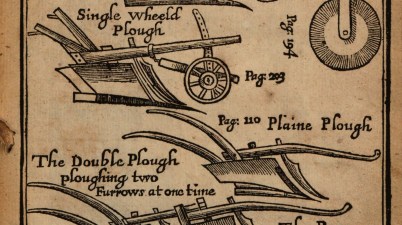
The Economy versus the People in Eighteenth-Century England
When did discussions of “the economy” begin, and why? William Cavert takes us to 18th-century England to explore the "improvement" literature of the time.
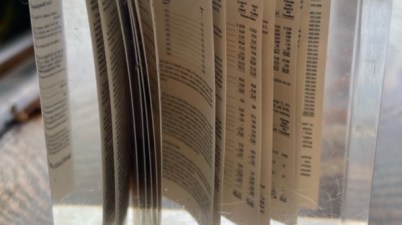
The Paper Power of Projects: Great Designs and Making America “Great” Again
Like the vintage paperweight that sits on her desk, historiographical "Great Designs" are entombed in the amber of a particular moment, writes Vera Keller.
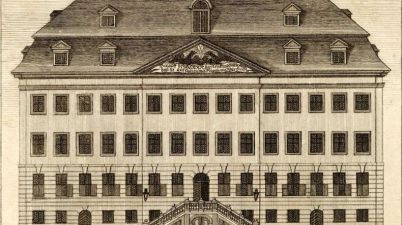
What Makes a Project Good or Bad? Lessons from Early Eighteenth-Century Germany
Anyone who has ever written an academic project proposal will recognise the demands in this early 18th-century German work, writes Kelly J. Whitmer.

From Chance Encounters to Fresh Insights: Serendipity at Work in Historical Research
Christine Keiner on how a chance find in Panama inspired her latest research on the unrealised "Panatomic Canal".

Echoes of Anti-Black Projects Across Time
Meagan Wierda on how the sudden closure of archives during the COVID-19 pandemic led her to a revealing nineteenth-century pamphlet.

The Strange Decline of the Global Imaginary
What has happened to the post-war global imaginary? Find out in this blog post by Björn Lundberg.

The Biggest, the Most Blank of the World’s Blank Spaces
How was Africa mapped before it was unmapped in the eighteenth century? Find out in this blog post by Petter Hellström.
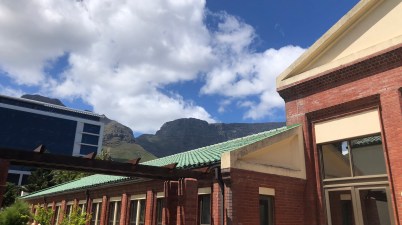
Adventures in Cross-Contextualizing Archives
How can different sources, archived centuries apart on disparate continents, speak productively to one another? This blogpost explores how cross-contextualization can help write new, global histories of knowledge.
Common and Not So Common Serendipities of Research
To what extent do serendipitous encounters shape our research? This author met her local collaborators by chance on the internet.
 JHoK Blog
You must be logged in to post a comment.