
Echoes of Anti-Black Projects Across Time
Read Meagan Wierda’s research article “Population Projections: Demographic Fearmongering and ‘Uterine Colonization’ during the Age of Gradual Emancipation” here.
Meagan Wierda
Université de Montréal
At first glance, Hints on a Cheap Mode of Purchasing the Liberty of a Slave Population is a rather unassuming pamphlet. Like many of its nineteenth-century analogs, this one, published in New York City in 1838, is short, anonymous, and not a little polemical. One would be forgiven for overlooking it.
I stumbled upon it at the height of the COVID-19 pandemic, when archives across the United States, where I was completing my PhD, were shuttered. Truth be told, canceling research trips was the least of my concerns. Still, I was expected to produce a dissertation, and so I pivoted to trawling online databases. I cast my net wide, looking for anything and everything pertaining to slavery, abolition, and the place of numbers in both pro- and anti-slavery publications.
Of particular interest to me was the American Colonization Society (ACS), an organization founded in 1816, whose members were unsympathetic to slavery and African American freedom in equal measure. Incapable of envisioning a multiracial republic with a growing free Black population, the ACS worked to facilitate the expatriation of free and emancipated men and women to Africa. It was over the course of this research that I fortuitously encountered Hints, which fit within the colonizationist genre.

Title page of the pamphlet Hints on a Cheap Mode for Purchasing the Liberty of a Slave Population (G. A. Neumann, 1838). Via HathiTrust (Public Domain).
This pamphlet, which appeared to have thus far escaped the attention of scholars, read like an anti-Black fever dream. Over the course of twenty-one pages, the unsigned author made clear that even projects claiming to bring human bondage to a gradual end—projects like those championed by the ACS—repurposed one of slavery’s most pernicious logics: the instrumentalization of African-descended women’s bodies.
Though anonymous, the author of Hints nevertheless betrayed his male pronouns within the pamphlet, situating himself within a long line of white men who have looked to coopt the reproductive capacities of Black women.
Colonizationists, including those who supported the ACS, were obsessed with demography, and so the focus on reproduction should come as no surprise. Indeed, for the pamphlet’s author, the womb was paramount, so much so that he explicitly branded his plans “uterine emancipation” and “uterine colonization.”
Hints’ author understood that to emancipate or colonize the United States’ entire African American population would be impracticable. But, if colonizationists simply targeted individuals who “are or may become prolific,” recalling enslavers’ characterizations of Black women as “increasers” and “breeders,” they could feasibly weaken the institution of slavery over time. Likewise, they could progressively whiten the country’s population by excising Black people from the body politic.1
As one of the co-editors of this year’s JHoK special issue, Ted McCormick, reminded me, this fixation on and administration of propagation was suggestive of philosopher Michel Foucault’s biopolitics, and specifically the ways in which bodies are disciplined and populations regulated.2
Sure enough, the author of Hints was unambiguous in his desire to optimize the Black body’s reproductive capacities. He went so far as to argue that “uterine emancipation” was a way to redeem such female slaves who “by reason of physical or intellectual defects are of the least value in the slave market” provided, it goes without saying, that “their procreative power be unimpaired.”3
Framed as emancipatory or not, this was very much the reasoning of enslavers.
Isiah Green, a formerly enslaved man in Georgia, recollected in a government-sponsored interview conducted during the Great Depression that “a greedy owner got rid of those who didn’t breed,” that is to say the “undesirables,” who included “the aged and unruly.”4
Even though the author of Hints pitched “uterine emancipation” as a way to redeem “undesirables,” in this case, individuals with physical or cognitive disabilities, he nevertheless dismissed those who could not or would not reproduce. It was they who incarnated the “least value.”
The arguments forwarded in Hints, shared by proponents as well as certain opponents of slavery alike, are a reminder that biopolitical power and projects are necessarily hierarchizing. Not everyone’s body is subject to the same kinds of scrutiny or intervention. Not everyone’s life—or, indeed, their capacity to produce it—is viewed as equivalent. Some people are deemed “undesirable” and thus discardable.
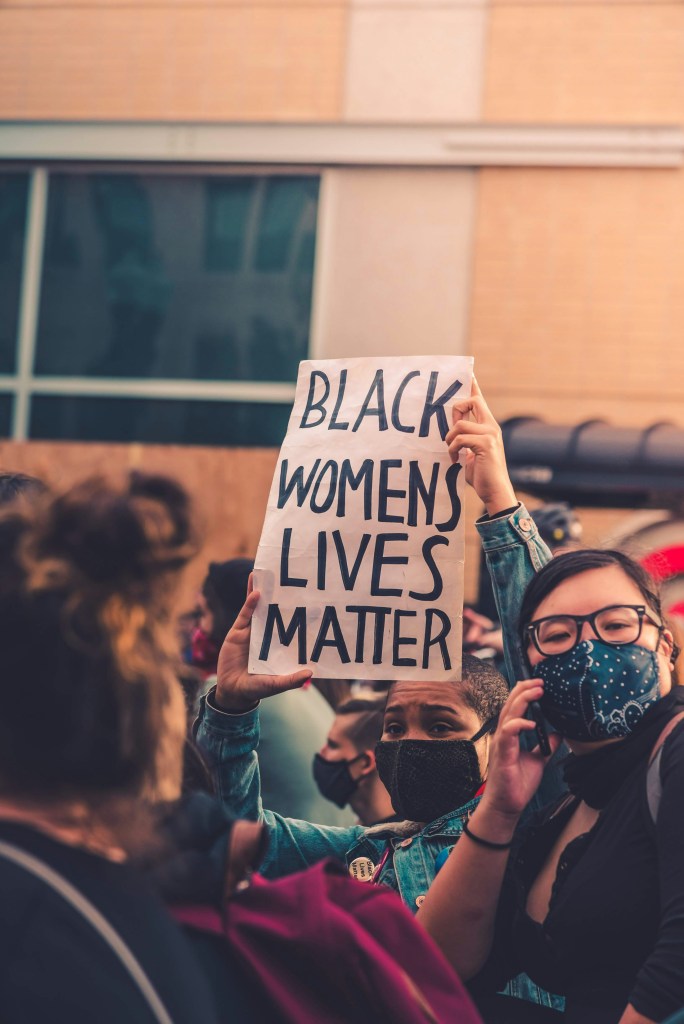
Photo: Max Bender on Unsplash.
On this point, philosopher Daniele Lorenzini reminds us that “biopolitics is always a politics of differential vulnerability.” He argues that:
far from being a politics that erases social and racial inequalities by reminding us of our common belonging to the same biological species, it is a politics that structurally relies on the establishment of hierarchies in the value of lives, producing and multiplying vulnerability as a means of governing people.5
Lorenzini is writing about the very pandemic that occasioned my discovery of this pamphlet, and specifically about those whose labor was (deservedly) appreciated (“medical heroes” and “care workers”), while that of others, primarily low-wage workers (including supermarket cashiers, transit workers, and delivery service persons), was undervalued. Far from being a great leveller, he argues, the coronavirus “blatantly reveals that our society structurally relies on the incessant production of differential vulnerability and social inequalities.”6
Of course, we do not need philosophers like Foucault and Lorenzini to theorize what enslaved people and their descendants have been telling us for generations about the precarity of Black life.
Still, as the United States was reeling from a deadly pandemic, to say nothing of the murder of George Floyd, it was chilling to be confronted with the echoes of these “differential vulnerabilities” across time, which reflect the enduring nature of anti-Blackness as project.
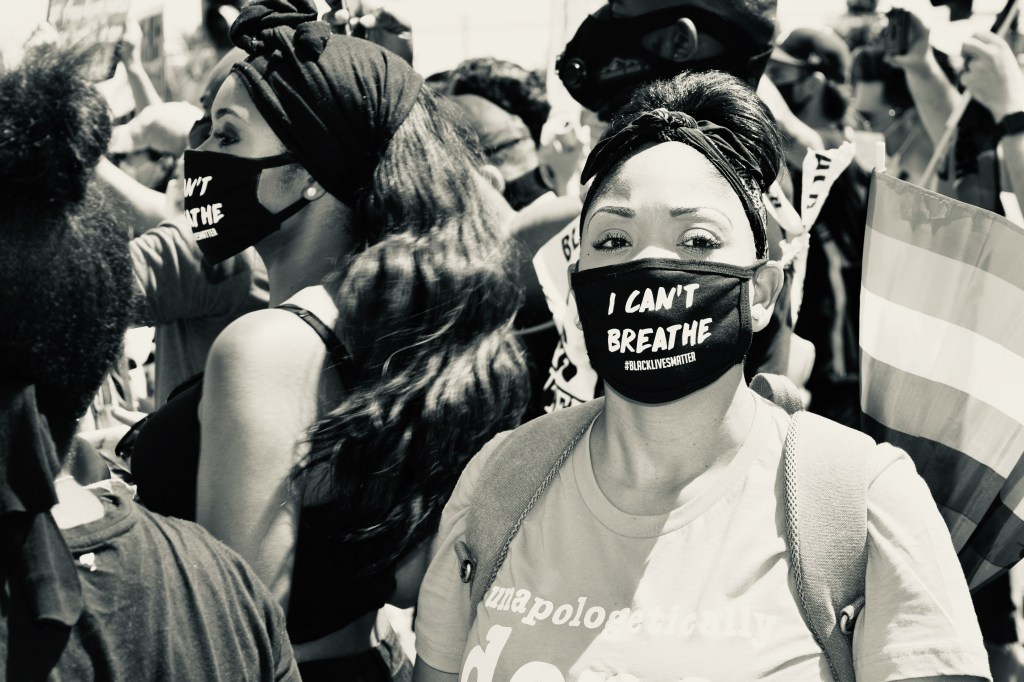
Photo: Faith Eselé on Unsplash.
Meagan Wierda is Assistant Professor of History at the Université de Montréal. She writes about who gets to count within the antebellum United States.
- Hints on a Cheap Mode for Purchasing the Liberty of a Slave Population (G. A. Neumann, 1838), 3. ↩︎
- Michel Foucault, The History of Sexuality, Volume I: An Introduction, trans. Robert Hurley (Pantheon Books, 1978), 139. ↩︎
- Hints, 19. ↩︎
- Federal Writers’ Project, Slave Narratives: A Folk History of Slavery in the United States from Interviews with Former Slaves, Vol. IV, Georgia Narratives, Part 2 (1941), 50. ↩︎
- Daniele Lorenzini, Biopolitics in the Time of Coronavirus, Critical Inquiry 47(52) (Winter 2021), S44. ↩︎
- Daniele Lorenzini, Biopolitics, S44. ↩︎
Journal for the History of Knowledge

 JHoK Blog
You must be logged in to post a comment.